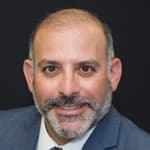
Implant & Digital Dentistry Educator · Founder, Advanced Implant Education | Digital Director, Guided Smile
Digital Dental USA Society · International Academy of Dental Implantology · International Academy for Dental Facial Esthetics · International Congress of Oral Implantology · Advanced Dental Implant Academy · Osseodensification Academy · MINEC (Megagen International Network of Educators and Clinicians) · Advanced Implant Education
Read full bio
Dr. Isaac Tawil is a MINEC Ambassador (Megagen International Network of Educators and Clinicians), a member of MINEC USA and sits on the Digital Dental USA Society board of directors, a Diplomat of the International Academy of Dental Implantology and the International Academy for Dental Facial Esthetics. He is a Fellow of the International Congress of Oral Implantoloy. He is one of Dentistry Today’s top 225 leaders in CE, a faculty member of the Osseodensification Academy, Brighter Way Educational Director (Phoenix, Arizona), and Digital Director of Guided Smile. Additionally Dr Tawil is an Ambassador for the Slow Dentistry initiative and a Fellow of the Advanced Dental Implant Academy. A recipient of the Pierre Fauchard award for outstanding achievements in dentistry and the Presidential Service Award for outstanding achievements in dentistry. He is the Founder and Co-Director of Advanced Implant Education, a Partner in TBS instruments, and Universal Shapers LLC. He is a new product consultant for several dental companies. Dr Tawil has held main podium sessions and hands on workshops world wide and enjoys a private practice in Brooklyn, New York.
What does it actually mean to be a digital dentist — and is an intraoral scanner enough to get you there?
Dr. Isaac Tawil is a Diplomate of the International Academy of Dental Implantology and the International Academy for Dental Facial Esthetics, a Fellow of the International Congress of Oral Implantology and the Advanced Dental Implant Academy, a MINEC Ambassador, and a board member of the Digital Dental USA Society. He is recognized among Dentistry Today's top 225 leaders in continuing education, serves as a faculty member of the Osseodensification Academy, and is the recipient of both the Pierre Fauchard Award and the Presidential Service Award for outstanding achievements in dentistry. As Founder and Co-Director of Advanced Implant Education and Digital Director of Guided Smile, Dr. Tawil brings a rare combination of clinical depth, product development experience, and global teaching to every conversation.
In this episode, Dr. Phil Klein and Dr. Tawil take a comprehensive tour through the digital tools that are redefining treatment planning and restorative delivery — starting with where intraoral scanning technology actually stands today, and building toward a fully integrated virtual patient model. The conversation covers why multifocal, multi-camera scanner architecture matters for posterior capture and AI-assisted data processing, why analog impressions — despite their margins — cannot support the kind of multi-dataset merging that modern full-arch and implant cases demand, and how facial scanning combined with mandibular jaw tracking creates a dynamic, movement-based reconstruction that leaves the static face bow and articulator far behind. The episode closes with a focused look at where 3D printing is headed, specifically the return of DLP technology and what it means for same-day temporization and eventual permanent restorations.
Episode Highlights:
Why multi-camera, multifocal intraoral scanners — such as the Shining 3D Elf with three cameras at approximately $12,000 — outperform single-camera devices for posterior margin capture, AI-driven gap-filling, and full-arch stitching accuracy, and why the ergonomics of scanner head size directly determines scan quality in the hands of most clinicians.
How merging STL intraoral scan data with DICOM CBCT and facial scan data inside a single software environment (demonstrated here with Shining 3D MediSmile MR) produces a reconstructed dental avatar that supports mandibular jaw tracking — capturing lateral excursive movements, protrusion, and open-close arcs to identify TMD risk, condylar displacement, and occlusal scheme in dynamic function rather than static intercuspation.
The clinical rationale for jaw tracking across restorative disciplines: how simulated mandibular movements rendered in Exocad, 3Shape, or Dental Wings allow the laboratory to evaluate group function versus canine guidance, assess full-arch wax-up occlusion in movement, and flag design conflicts before any material is milled or printed — without requiring the lab to perform any manual data matching.
Patient selection and treatment planning for full-arch implant cases: why prosthetically driven implant placement — using the merged facial scan, CBCT, and intraoral data to verify screw access angles, assess ridge anatomy, and target an FP1 Carl Misch classification outcome — reduces the risk of transition zone failures, ridge lip deformities, and post-surgical prosthetic complications in high smile-line patients.
The return of DLP 3D printing technology: how current DLP printers achieve full-arch provisional output in approximately 11 minutes with crisper margins and superior color stability compared to LCD alternatives, why nitrogen cure chambers extend provisional longevity to three months or more, and the near-term trajectory toward zirconia-infused printable materials capable of supporting permanent indirect restorations.
Perfect for: general dentists and specialists looking to build or expand a fully integrated digital workflow, clinicians planning full-arch or implant cases who want to move beyond static occlusal records, and any practice evaluating intraoral scanner upgrades, facial scanning systems, or in-office 3D printing.
If you have ever wondered what separates a practice with a scanner from a practice that is truly digital, Dr. Tawil answers that question in detail — and shows you exactly what the next step looks like.
Transcript
Read Full Transcript
This transcript was automatically generated and may contain errors or inaccuracies. It is provided for reference and accessibility purposes and may not represent the exact words spoken.
Once they open the file, they then will see all those layers on top of each other. And they will see those simulated movements and they can hit play and watch those simulated movements. So now think about it, Phil. You want to do a full arch. You want to do a wax up. You want to see how that's going to play. Are we going to be in group function, canine guidance? Where is that occlusion going to be at in movement? In movement, not just in plain static function, just in a byte.
Welcome to Austin, Texas, and welcome to the Phil Klein Dental Podcast. Thank you for joining us. Digital technology is doing things in dentistry today that would have sounded impossible not that long ago. And when it's implemented correctly, it can fundamentally change how we diagnose, plan, and deliver care. From faster workflows and greater precision to better patient communication and more predictable outcomes, digital tools are no longer nice to have. They're becoming essential to modern practice growth.
On today's episode, we're joined by one of the true innovators and educators in digital dentistry, Dr. Isaac Tawil. Dr. Tawil is the founder of Advanced Implant Education, a partner in TBS Instruments and Universal Shapers, and a trusted new product consultant for several leading dental companies. He lectures and teaches hands-on workshops around the world, and he does all of this while maintaining a busy private practice in Brooklyn, New York.
In our conversation today, we're going to take a deep dive into the digital ecosystem that's reshaping both surgical and restorative dentistry. Dr. Tawil walks us through the latest advancements in intraoral scanning, including improvements in ergonomics and AI-driven data capture. We'll talk about facial scanning and mandibular jaw tracking, which helps clinicians build a far more accurate virtual patient, moving well beyond the limitations of traditional face bows and articulators.
And finally, we turn our attention to 3D printing. What's actually changed? What really matters for same-day dentistry and immediate protocols? And which printer technologies are worth paying attention to right now? So if you're interested in how digital technology can elevate clinical outcomes, streamline workflows, and open new opportunities for your practice, you're going to want to listen to this episode from start to finish.
Before we bring in our guest, I do want to say that if you're enjoying these episodes and want to support the show, please follow us on Apple Podcasts or Spotify. You'll be the first to know about our new releases and our entire production team will really appreciate it. Dr. Tawil , it's a pleasure to have you on the show.
Thank you. Nice to be back. Yeah. So you've done a lot of work with us in the past, a lot of webinars and podcasts, and we do appreciate it. And you've done so many cases that the experience you have is invaluable. So again, we're very happy to have you. We're going to be talking about different technologies. Let's start off with the intro scanner. As with all technologies, companies are always looking to improve the product. In the case of the intro scanner, we've seen improvements in ergonomics.
as well as artificial intelligence that helps us capture the data and plan our cases. So talk to us about the latest improvements with the intra-all scanner, and feel free to mention any brand that you like. We're all open to that. And tell us how it is helping clinicians get better clinical outcomes, specifically with full-arch cases.
Let's start before we get to full arch cases. Just the sheer size of the scanners have really scaled down. Some companies haven't really embraced that. They've kind of shrunk their scanners, but they're still...
pretty large. And when you're trying to capture tough areas in the mouth, you have that preparation on the upper second molar, all the way in the posterior. You're trying to get that distal margin. You can't get the patient open wide. Your hand is struggling to try to hold it right and get the right angles. And it becomes really troublesome. I mean, imagine trying to do a crown on a wisdom tooth. I mean, with the intro scanner, it's quite difficult. And the gold standard is still really impression material.
Right. The impression material, when we took it and we had it added in our hands, if you examine the preparation, examine the impression, you knew whether or not it was good or not. Now, that doesn't mean that there weren't a lot of poor impressions that were sent over to laboratories. But there is a big advantage to be able to have that.
internal scan and then really dive down deeper into the preparation. Look at the color difference in the soft tissue and the margins and the prep of the tooth and where everything is at. And so that has to be said that you have a right type of a scanner head so we can capture all the different availability. So a lot of the scanners, they said, you know what? I don't care about ergonomics in the scanner. I just want to be able to...
captured that posterior area. So they made longer, thicker scanners, which kind of went away from the way the thought process of where that industry should be going. The newer scanners, you're seeing a lot on the market. Most of them are coming out of Asia. You're seeing some tremendously slimline scanners, and they're not sacrificing the technology. They're usually structured light-based technology. There's different types of...
light technologies that we can try to capture. And the structured light seems to be the easiest for us to be able to capture. And when we do that, and we can actually shrink down that technology. A lot of these technologies are based off of multifocal lenses, meaning there's more than one camera inside of the actual scanner. There could be a couple of black and white scanners, a color scanner.
And I think the black and white scanners really help us get that detail. But then the color scanner helps us discern where the soft tissue is, where the prep is, where the scan body is, basically where the mucosal lines are, because it's kind of hard to see that in the black and white scans. Now it was all about, okay, we got all this fancy technology. We have these multi-camera scanners. And I would really recommend only using a multi-camera scanner. And single camera scanners only give you one perspective.
camera scandals really help us out a lot, which I'll explain in a moment. There's no question the multi-camera aspect is great, but getting the camera smaller and more ergonomic is going to ultimately allow the dentist to take better scans. Yes. If I gave you a pen to hold and that pen was just a massive pen, it's hard to write with it. But if I give you a nice slim line pen, you have that nice grip.
You're able to really control your writing and you really are able to now work masterpieces from it. So it could be a paintbrush, it could be a pen, you could now become an artist. And I think scanning is very much like that. It's an art and you have to learn.
how to scan, how to create your scan pass to get good stitching. Because what we're doing is stitching image upon image upon image upon image. So if you can hold the scanner, yes. Now you mentioned that dentists are still doing analog impressions. And the argument from their perspective is, I've been doing it this way for decades and I get incredible margins in my lab.
works very closely with me and they they could read my impressions beautifully but what they're missing out on
is really the integration of the different data captures that we're getting from merging the STL with the DICOM, doing facial scans, which we're going to talk about. You can't do that with analog. No, because what is analog giving you? It's a stone cask. You don't know where the mucogingival margins are. You don't really know where the tissue begins and sometimes even tooth begins because it may be actually caught underneath an undercut and you may be tearing in that impression. So there is a huge advantage of being able to see all of that right.
here right now and say that's a good model that i want to send out to a lab and and also the real-time feedback if i send this over to a lab i can call the lab say please download that and tell me what you think before i dismiss the patient right i can't do that i can't i can't throw an impression far enough to hit a lab where i can get it there fast enough i mean the key thing is that they can actually see it right right so the soft even though you're in new york
city and there's labs all over the place right open the window up and throw the model i don't think i could reach yeah they're a little too far from me it's much faster to send it and and you get to choose the lab of your choice it could be that fancy lab that you only use for really high-end aesthetics or that implant lab that you use for that they can give you real-time feedback based off of what you're doing right so that's something really unique that we just can't do with the analog version so yeah the gold standard of capture is always going to be analog because we got great margins and i was comfortable doing that but go ahead
my 76-year-old father in the other room, if he will ever pick up an impression material again, and his answer is no. It's basically only if he gets an open contact back on a crown that he would even think about using impression material. He'd much prefer to use intro scanner, and he's seeing his preps, he's seeing how nicer they are looking because he's able to refine them before he sends them out. And the software can automatically fill in some missing data. That's the great part. We have AI in there that will fill in gaps, fill in voids.
when needed. So if you don't need that undercut and that second molar has nothing to do with the case, it'll still fill it in for us. Now having that multifocal camera gives us a few different advantages. It gives us the ability to implement AI. So if we have more than one camera inside of a scanner, we can now say, well, that scanner is capturing better than this one in this lighting. So let's, when we merge that data.
Two out of the three gave us this. So let's use two out of the three, not that third. Are they still selling? Are they able to do that? Right. Are they still selling? There are a lot of single camera scanners out there. And there are a ton. But they really should only be multifocal. So do you think the dentist who's looking to buy a scanner for the first time may not be?
fully aware that there's only one camera, and obviously that's going to be less costly, right? Not really. I mean, now the multifocal scanner that we have now from Shining 3D, that one, the Elf, has three cameras, and it's only $12,000. That's not a lot of money when you think about where we used to be. So why would anybody want to buy that $50,000 range only a few years ago? Right. Why would anybody want to buy an iOS that has one camera?
I would say only if the lab was giving it to them for free and they were working on like, it happens to be that Dandy actually made a nice little scanner and they can get real-time feedback. And if you want to break into doing single crowns, that's a nice scanner that you can do that with if you want to use Dandy as your laboratory. That might be a plus or minus. I'm not going to say anything positive or negative about that. I have no experience with that. So let me ask you this before we go on to the next topic. And I want to get into facial scanning and jaw tracking in a second.
To close up the iOS discussion, would you say that clinicians are getting more accurate scans in less time with fewer re-scans or taking an impression or redo with less frustration for not only the dentist but also the patient because it's a lot more comfortable for the patient? So in your mind, there's no real compelling reason to continue with analog.
I think you have to move to digital. And if you're not, your neighbors are, and the patients see that. They get wowed by that factor of seeing it right in front of them. They would love if you can mill the crown in your office or design it, 3D print it. That's where the future is. And they're going to end up going to another dentist at some point, unless they're married to you for insurance reasons. They're going to end up going. Those fee-for-service patients, they want to see all that tech. The quality is there. We know that already. The reproducibility is there. The real-time feedback is there. The ability to make changes.
if someone comes back in you still want to scan one little margin you don't have to scan the whole scan over we can just scan like remember when we used to do the watch impressions after and you weren't really sure if it really merged right or not right with this you can watch it it's not a big deal you go ahead you remove a little area and you re-scan that one little area enough to scan the whole all right let me ask you this uh are the labs preferring
the intraoral scanner over the getting absolutely so nobody who wants to pour models these days you know and what happens when that model is not poured correctly the porosities and all that even they're taking your your impression and they're scanning it in a desktop scanner they're using that but now they're missing out on all the color information that's the downside of it right okay so let's go into facial scanning so facial scanning and i know you're a big fan of it it's one of the most
valuable tools you've said that you like to use in your office. You've got facial scanning and you've got jaw tracking. Now, these two things, they help us see the patient as a whole, not just the teeth. And jaw tracking is certainly a far cry from the old days when we relied on the face bow and the articulator to simulate mandibular movement. So tell us how these two digital tools, facial scanning and jaw tracking, help create a more accurate
quote-unquote, virtual patient and why this has become revolutionary for both surgery and restorative work.
I think we spoke about on a previous podcast, like creating a dental avatar of your patient, being able to have that 3D reconstruction. Now that's really nice. And there are some nice facial scanners out there that exist. You mentioned also the analog version, going with the face bows and gothic arch tracers and things like that, which are really, really helpful. And again, the gold standard that we have to meet up with. Digital always has to meet analog, but then pass it in some superiority in some way to make it worthwhile. So having that face...
facial scan is wonderful. We can merge that with the CBCT data, with intraoral scan data, and now we have what we like to call a reconstructed patient or a dental avatar. The one thing is that patient, they can move their jaw in different directions, but that avatar is still stuck in a two-dimensional plane of being in a bite. Now we can simulate little teeth movements, which is great, but can we really see it even further now? By having the CBCT merged with the facial scan and already having that intraoral scan data,
We can either put what we call a bite fork or we can put some stickers on teeth. And now we can simulate the patient's movements. We can ask the patients to go into lateral excursive movements. We can ask the patient to go into protrusion, open and close. Now we capture all that data. And now we get to see the arc of where the actual mandible meets into the central fossa and how that relates to the jaw. So we can identify TMD. We can identify airway.
We can also identify that if we open the bite, that we are perhaps going to create some sort of a displacement, maybe anterior displacement in that condylar region of that articular disc. So we know, like there's an old saying, you can open up a patient three millimeters, no problem. But if a patient is already in hyperocclusion because their previous teeth were not done correctly, that becomes a big struggle.
and now you open them three more millimeters, that's really not something that you want to do. So you have to kind of figure out where that balance is. And that mandibular jaw tracking gives you the ability, because we're layering the facial scan with the CBCT, with the internal scan, and then getting those simulated movements. Other companies have had this for years. Modjaw has been out there for a long time, but it was a little cumbersome to work with because we now have to implement that with another internal scan, with the CBCT, and bunder it all together in different softwares.
Now we have this all in one software. Yeah, explain that to us in a second. But I want to ask you, so what's the technology that's actually capturing the jaw movement and the jaw tracking? Is that part of the facial scanner? Absolutely. So it's part of the facial scanner. There's separate.
There's a request to just do a facial scan. And then we have what's called mandibular jaw tracking. We wear something like an obturgate to show the teeth. And then you can put stickers on those teeth and they glow. They show up. Now those are fiducial markers that the scanner can observe and they can identify. So do they move their mandible as your... They do.
They do. So when you're in bite, when you're in total maximum intercuspation, you put the stickers on so that you can see the stickers. I usually bond them on with a little composite or a little bonding agent. They stay on very nicely. Then I go through those simulated movements. And that then will give us the relationship of how the teeth are moving with the face, which is impressive.
but also with the actual jaw because the CBCT is layered on top of that facial scan and internal scan. We can do all the matching within one software. What's the name of that software? It's the facial scanning software from the MediSmile, which is the Shining3D software.
And again, there are other availability. You can use Moddraw, but Moddraw is very expensive. And then you have to buy another software and implement that. Whereas the MediSmile MR for mandibular jaw tracking or mandibular relationship, that feature is inexpensive compared to the other. It's a fifth of the...
Now, what does the lab do? Do they use Exocad to get all this information? Yes, they use Exocad, 3Shape, Dental Wings, a lot of third-party software. And now those are layered. Those are stacked in the software. So the lab doesn't have to do any matching. They simply have to open the file.
And once they open the file, they then will see all those layers on top of each other. And they will see those simulated movements and they can hit play and watch those simulated movements. So now think about it, Phil. You want to do a full arch. You want to do a wax up. You want to see how that's going to play. Are we going to be in group function, canine guidance? Where is that occlusion going to be at in movement? In movement, not just in plain static function, just in a byte.
So this jaw tracking software and this whole mechanism of capturing the jaw movement is not only for full mouth cases, right? A general dentist is doing a three-unit bridge, a single crown. It would serve that dentist perfectly as well. Absolutely. And any dentist that's looking, you want to do even for orthodontists as well, thinking about that and putting them through meningibility jaw movements on some of these more complicated cases, that really helps them a lot. So cosmetic dentists, general dentists, prosthodontists, I can't find a use for endodontists.
Yeah, right. Other than that, periodontists could use this. Yeah, and I assume oral surgeons or GPs that are doing oral surgery, implant planning, not necessarily with the photogrammetry, but they could use this. Absolutely. We don't necessarily need, there are other things other than photogrammetry that are out there. There are lots of different companies that make something that I termed years ago with my good friend, Alan Banks. We termed this term grammetry instead of fomogrammetry, which is just using these elongated scan bodies. And those work pretty well. They're not as good as the photogrammetry. Some claims.
that they are as good, but that's neither here nor there. Time will tell what's good and what's not good, but we know photogrammetry works. But regardless, you can use an intro scanner in combination with that, in combination with the facial scanning. And now we're starting to build, especially in the design phase. So that's the most important part. When I'm building a house, I don't just dig a hole and start building.
We look at the structure, how the structure is going to be, and then we look at the foundation and how that house is going to be supported. That's how you have to place implants. You can't just say, let me stick in these implants in any different direction and then figure it out later. That's always a disaster.
Those cases, I shouldn't say always, some surgeons are so incredible at what they're doing and they can envision everything and they don't need these things. But most of us would like to have the tools and make sure the screw access holes are in the right position and we can get everything at the right spot so we can go driven in a more FP1 solution, meaning fixed prosthetic one, Carl Misch classification, where we don't have to do grinding of tremendous amount of bone to flatten things out and do an all on four and have a substitution for the pink and the white of the patient's teeth.
So how does a dentist, Dr. Tawil, try this facial scanner and jaw tracking software without actually buying it first and maybe doing a case, but they don't have one?
A lab may have it. A lab may invite a lab to come over and let them help you with the cases because a lot of the labs have these devices and they may have extra off photogrammetry, they may have a facial scanner, but I just don't think two-dimensional pictures are enough anymore for us to be able to capture the full patient's face. I could show you a great picture of a patient and you see the design and then you start rotating the design around in that two-dimensional picture and you see these massive black triangles. You don't see the face wrapping around the teeth.
And that's the problem. So you don't know if your design is really accurate or not. And now you go into surgery and you print a set of teeth and they don't look so great.
And now you, if you can fix them, great, you can fix them, maybe make a new set. But maybe you already have the implants in place and they can't be fixed. Now you're stuck in that position. And now you see that transition zone of where the pink is and you see a huge ridge lip because you didn't plan it correctly. And now you don't, you see the old pink, the new pink, the white, all in the patient's high smile line. That can be a disaster. All this technology can prevent all of that. You can actually. That's the goal. Right. We need fail safes.
Because look how many centers there are for full-arch dentistry, whether it's teeth or whether it's implants. There's so many different centers out there. So how do we get some degree of control? Just like there aren't people just knocking down houses without plans. Why is the building departments requiring all these plans and events? They're not just going to let you knock down your house and say, build a new one. They'll let you knock it down. You'll get a permit for that. They're not going to let you build a new one until they see the plans and approve it. Same thing in dentistry. Shouldn't we have a set of plans for the patient before we go in?
Right. I don't think that's fair. Let me ask you this. For a house, we can do it for teeth. What about the dentist who doesn't get involved with implants, but he or she does very nice indirect restorative work? Veneers, single tooth. That to me is a huge, huge facet of it. I mean, there are people who are actually doing breast augmentations and using these because they want to do simulations for that. I mean, if they're doing it for that, facial plastic surgeons are capturing it and they can do restructuring of the jaw and then overlay that. They're doing it. Why can't we do it?
So Dr. Tawil, suffice it to say, you couldn't live without these tools at this point in your practice. I can't imagine not using it in my practice anymore. And we're three dentists in this practice. My father, my partner, Michael, who's the youngest dentist here, and myself. And all three of us are using them. Whether it's for orthodontics, whether it's for cosmetics, or whether it's for implant-related, we're using it.
And even for dentures, think about dentures. There's anyone that I recommend, follow Wally Renee and the MOD Institute and see what he's doing with all these combinations of all these different features. It's really incredible. What you're saying is once you start using these tools, they become part of your routine planning for every case, right? It's almost like this is the standard. This is SOP, standard operating procedure for my office. Standard operating procedures, absolutely. If I could quote Dean Valfiatis for a moment.
just because you have an intro scanner does not make you a digital dentist. It's all the rest of the tools that come along with having that magic Harry Potter wand in your hand.
If you want it to become a magic wand, you need to embrace all the tools around it. And as you embrace more of these magic weapons that we can use in our arsenal to be able to approach for the proper 3D reconstruction of a patient, we're only going to get better and better. And then you truly become a digital dentist. I've never stopped learning. And every week I learned another lesson. Yeah, for sure. What's your favorite facial scanner? What do you like? I'm partial. As a clinical director for Shiny 3D, I've really embraced the Shiny 3D MediSmile with the MR jaw relationship.
That thing has been incredible in the practice. I've helped develop a lot of the features on it. We're working on it to make it a little more user-friendly so that it's even easier for a dentist to do this. So you don't have to have these big chunky pieces to be able to capture mandibular jaw movements. And I think we've really come a long way and the future is only getting brighter because with the companies that I've been working with and the laboratories that I've been working with, the synergy between them embraces new ideas and new technology.
a never-ending cycle so the one thing i will say we never stop developing but at the same point in time partnering with the right people that can actually use that technology that's the important part that's going to drive us forward and never say well just wait for the next product next year if it's something that fits you now if it fits you now with room to grow you're in great shape but just don't buy paperweights right don't buy something that you're going to sit and leave on leave it on the shelf you have to embrace it you have to take the
courses, learn how to use it, embrace the technology and make yourself a better clinician.
Yeah, for sure. And Shiny 3D is a great company. There's no question about it. They're way ahead of the curve on a lot of stuff. To close out this particular podcast episode, let's just briefly talk about 3D printing. It keeps getting faster and better. So in your opinion, Dr. Tao, what recent improvements in 3D printers really matter from the standpoint of same-day dentistry and also immediate treatment protocols? And also give us a recommendation. I know you're working with Shiny 3D. We're working with Shiny. There are great...
printers out there like SprintRay. RapidShave is great. I like Asiga's and VisionTech. There are great printers out there. Get into a printer that fits your need. I like the Shining 3D because it fits my ecosystem. And now we have a DLP printer, which is really helpful because that thing is built for the long haul. DLP is a finer technology.
because we can get crisper, finer margins, especially around temporary crowns if we want to use those, or if you want to use inlays as permanent inlays or onlays, because now we have ceramic bridge material. And there are lots of companies like Packdent and others that have final restorative materials that you can use that can claim for insurance. So those things are available, but they're fast.
AI design is fast. So we can design these super fast, get them into a patient's mouth same day. I still think milling is better for full crowns or bridges, but for temporary, certainly I love these for crowns. But who knows? In the coming years, we may be embedding even more ceramic filler that will be able to give us the ability to do permanent crowns out of 3D prints. And AI is helping us get there faster. Right. So the biggest advancement you'd say is that they're faster.
Faster and that the DLPs are back. We went away from DLP into LCD for speed, but the DLPs are back with the same speed, which is incredible. Okay, so that's important. So I can print a full arch in 11 minutes. 11 minutes with a DLP, get crisper margins, get a nicer cure. I can then go put it in a nitrogen cure machine, get rid of the oxygen layer, and it'll have a nice long-lasting color so I can get three months out of my temps easy on these full arch cases, deliver those. And then the unique part is that...
The power is not being fully used on these DLPs. They can even handle more power. So if they decide to infuse, let's say, zirconia beads at some point and make even stronger restorations, maybe those will be our final restorations at some point, then these machines are built for the long haul. And I think there's more and more pod printers that will come out for the inlay, onlay, same-day, crowns, chair-side printing materials. That'll be out very shortly. There's some cool things in the work. I do want to let our audience know, Dr. Talwell, that you did a webinar, I think it was...
April 2024, and you showed a case where the patient came in. It was a full arch reconstruction case, and the thing was fractured. And that was, you know, basically the patient had no teeth. I think it was all on six. And you repaired that by all the acquisition data that you took in using a facial scanner, CBCT. You did an intraoral scan. I think you took the broken piece. You pieced it back together. Yeah, you pieced it back together, and then you scanned it in a desktop scanner.
Right. Correct. And then you put that into the mix. Which I don't even need to do that anymore. I could have scanned it with the wand now. They're so accurate because you have these wider windows. Right. The technology is getting better. That same patient left with teeth the same day instead of a reattached fractured piece. You made them a brand new provisional. That was beautiful. And what's nice about it, Phil, is if he breaks it again, I can print 10 more.
Yeah, that's unbelievable. Yeah, that's unbelievable how much time that saves you. This patient that we have in the other room right now that we're putting in his teeth, it fit beautifully. I'm printing six more just in case because I can just for fun. I mean, it is kind of like a dynamic situation. Things don't always stay the same. Things shift in the mouth. So those things that you're printing now. It's nice if we have a backup or two. I'm not really six. I'm only printing two. I was just joking. I could print six if you want. Yeah, I mean, if it breaks on the way to the car as he's leaving your office.
Then you really saved yourself some time. All right. Well, listen, I think it's been phenomenal talking to you. You've got so much going on. You're going to go, I'll let you go back to your patient. There's no question, you know, you're utilizing technologies in ways that I think we all will be doing in the future, but I think you're ahead of the curve. I think there's definitely the early adopters.
you get the next group and the next group, you're leading the way, not only in use, but also education. We appreciate- And one of the leaders, one of them, there's so many out there. But yes, we're one of the leaders, but it's coming and I feel like people should start looking more closely so that they can maybe be not a super early adopter, but a somewhat early adopter to make their practices a little bit more interesting and more appealing to the general public. I mean, you're so lucky, Dr. Tawil, that you're actually practicing in your prime with all of this technology available. Because if you were practicing-
practicing 40 years ago, 30 years ago. I might not be a dentist. You might not be a dentist. Thank you very much, Dr. Tawil. We'll have you on again and have a great evening. Thank you.
Clinical Keywords
digital dentistryintraoral scannermultifocal scannerShining 3Dfacial scanningmandibular jaw trackingMediSmile MRCBCTSTL DICOM mergedental avatarvirtual patientocclusionjaw trackingExocad3ShapeDLP 3D printingsame-day dentistryfull arch implantsFP1 classificationphotogrammetryIsaac TawilDr. Phil Kleindental podcastdental educationAdvanced Implant Education